
- 0 Comments
- By m7
- Uncategorized
Whoa! The moment you open a browser extension wallet and see a new token pop into your balance, something in your chest tightens. Really? Free money? My instinct said be careful. I’m biased, but that little thrill is exactly what attackers exploit. On one hand the convenience of a browser extension wallet makes DeFi feel immediate and alive. On the other hand those same conveniences create attack surfaces that are easy to miss if you’re rushed, tired, or not paying attention.
Here’s the thing. Browser extensions are powerful. They inject web3 APIs into pages. They sit between your mouse click and blockchain state changes. So one wrong permission, one malicious dapp, and your assets can walk away. Initially I thought the obvious checklist — strong password, seed phrase offline — would cover most risks, but then I watched a colleague accidentally approve a token transfer via a spoofed UI and lose funds. Actually, wait—let me rephrase that: the checklist helps, but real safety is deeper and more behavioral than a single checklist implies.
Short tip: use separate wallets for different purposes. Wallet A for trading. Wallet B for staking. Wallet C for experimental airdrops. It sounds fussy. But this separation is a high-return tradeoff on risk.
Where browser wallets commonly fail (and why it matters)
Phishing UI. Very very important to spot. Malicious sites mimic wallet prompts so well that you might hit approve without reading. Hmm… that little “Confirm” button can be a trap. Social engineering is still the number-one vector in many thefts—more than clever cryptography. On one hand the extension displays a confirmation; though actually the page can overlay visuals that mislead you. So always read the wallet’s pop-up and confirm the destination address, amount, and calldata.
Over‑broad contract approvals are another massive blindspot. Approving “infinite” allowance for an ERC‑20 token is easy and common. It feels convenient because you don’t want to sign again. But that convenience lets a malicious contract drain your tokens later. Consider approving limited allowances and revoke unused approvals. There are tools to help with revocations, but even those tools require trust, so vet them first.
Chain/Network spoofing. Seriously? Yep. A malicious dapp can prompt you to switch to an RPC that behaves oddly or fabricates transaction information. Always double-check chain IDs and RPC URLs for mainnet vs. testnet confusions. If somethin’ looks off, pause. Trust your gut.
Multi‑chain complexity: the subtle traps
Multi‑chain is seductive. You can hop from Ethereum to BSC to Polygon with a couple clicks. Fast and fun. But each chain adds complexity and new risks. Different chains have different explorer ecosystems and fewer monitoring tools. That makes it easier for scams to persist on smaller chains. My experience? When you go cross‑chain you need repeated paranoia. Really.
Bridges introduce unique failure modes. They frequently rely on custodial or multi‑sig operators, have smart contract complexity, and can suffer from oracle or reentrancy issues. On top of that, bridging often prompts multiple approvals across chains—more click events, more chances to mess up. If you use bridges, start with small amounts and verify the bridge operator’s track record.
Practical hardening checklist — what I do (and what you can steal)
Use dedicated browser profiles. One profile for everyday browsing. One for DeFi. It reduces the blast radius of malicious extensions. Also consider a fresh profile per wallet if you’re handling large sums. It’s a small hassle. It’s also high leverage.
Integrate hardware wallets. If you hold significant funds, signing via a hardware device adds a crucial second factor that malware can’t fake easily. Hardware confirmations force you to see transaction details on a device screen. That alone stops many attacks. Initially I thought hardware wallets were overkill for modest amounts, but after a scare I moved most of my assets offline.
Limit approvals and use spend limits. Instead of “infinite” approvals, set specific caps and expiration times if the wallet supports them. Review allowances periodically. Revoke stale permissions—yes, even for tokens you used months ago. Minor annoyance. Big payoff.
Pin and verify RPC endpoints. If you add a custom RPC, save it and label it clearly. Don’t accept arbitrary RPC pushes from unknown sites. If a dapp asks you to switch and you don’t recognize the RPC, decline and research the endpoint. This is especially key on chains where block explorers are less reliable.
Run small test transactions. New dapp? Toss ten dollars. Really. The cost of a failed test is low compared to losing a full position. Expect friction. Expect some learning. The small loss is the price of safety.
Wallet hygiene and the human element
Seed phrase rituals matter. Store seeds offline. Use metal backups for long-term storage if you can. I’m not 100% sure that every user needs a cryptosteel plate, but for life‑changing amounts it’s the right move. Don’t store seeds in cloud notes or photos. Ever. Don’t even think about it.
Be judicious with extensions. Only install well-known, audited wallets. Look for active maintenance, GitHub activity, and community buzz. That said, popularity isn’t a perfect proxy for safety—sometimes supply‑chain attacks happen. So pair popularity checks with basic security hygiene.
Stay updated. Wallet extensions push security fixes. Update quickly. But also validate the source of the update. Rarely, malware can masquerade as updates via compromised extension stores. If an update looks fishy, pause and research.
Why I recommend Rabby as part of a layered approach
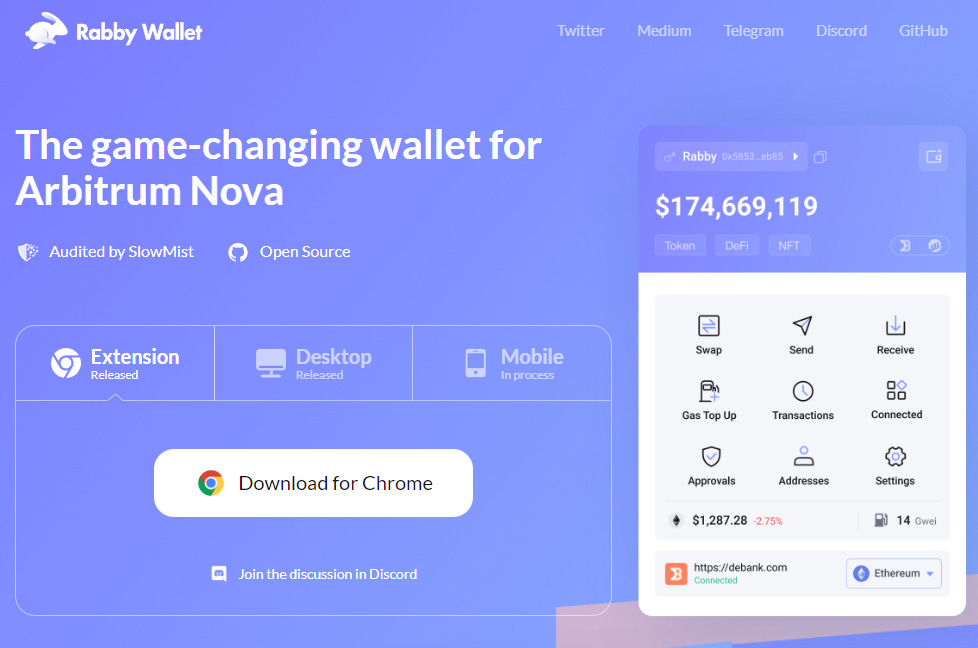
Okay, so check this out—I’ve tried a handful of multi‑chain extension wallets and found some features particularly valuable in day-to-day DeFi: clear approval management, intuitive account separation, and hardware wallet support. For a practical, safer browser experience, consider rabby wallet as one tool in your stack. It won’t solve everything. But it does make certain risky operations more explicit, which reduces accidental approvals.
I say that because the interface matters. When prompts are clear and permission granularity is visible, users make better choices. The wallet itself is not a panacea. It’s a tool. Use it with sense and a little skepticism.
When things go wrong — immediate steps
Pause transactions. If you suspect compromise, stop interacting with dapps. Move funds to a secure wallet if you can. Seriously—move them immediately and then start investigating.
Revoke approvals. Use reputable revocation services, and again check those services’ security posture. Contact hardware wallet support if you used one. They often provide emergency guidance.
Change linked accounts. If your email or browser profile might be compromised, consider rotating credentials and using a different machine for recovery. This is annoying. It helps though.
FAQ
Is a browser extension wallet safe for large holdings?
Short answer: not by itself. Use extensions for active trading and interaction. For large, longer‑term holdings combine a hardware wallet or cold storage. Many users keep a small “hot” wallet for daily activity and a “cold” wallet for the rest. This split lowers risk dramatically.
How do I check a contract before approving it?
Look up the contract on a trusted block explorer and inspect recent transactions. Scan for open source code on Github and community audits. When in doubt, use a smaller allowance and monitor activity. There are tools that decode calldata and flag dangerous methods—use them as part of a broader review.
What about mobile wallet apps vs. browser extensions?
Both have tradeoffs. Mobile wallets reduce exposure to browser extension supply chain risks but add mobile‑specific attack vectors like SMS phishing and malicious apps. The principle remains: minimize attack surface, use hardware wallets when feasible, and separate accounts by risk profile.
Okay—I’m gonna be blunt. There is no silver bullet. Security in DeFi is layered, behavioral, and evolving. You will make mistakes. I make mistakes. What you can control is your setup and your habits. Start with small, high‑impact steps: separate wallets, limited approvals, hardware confirmations, and careful RPC handling. Then iterate. Watch things. Learn from near misses. The payoff is peace of mind and fewer sleepless mornings. It matters.